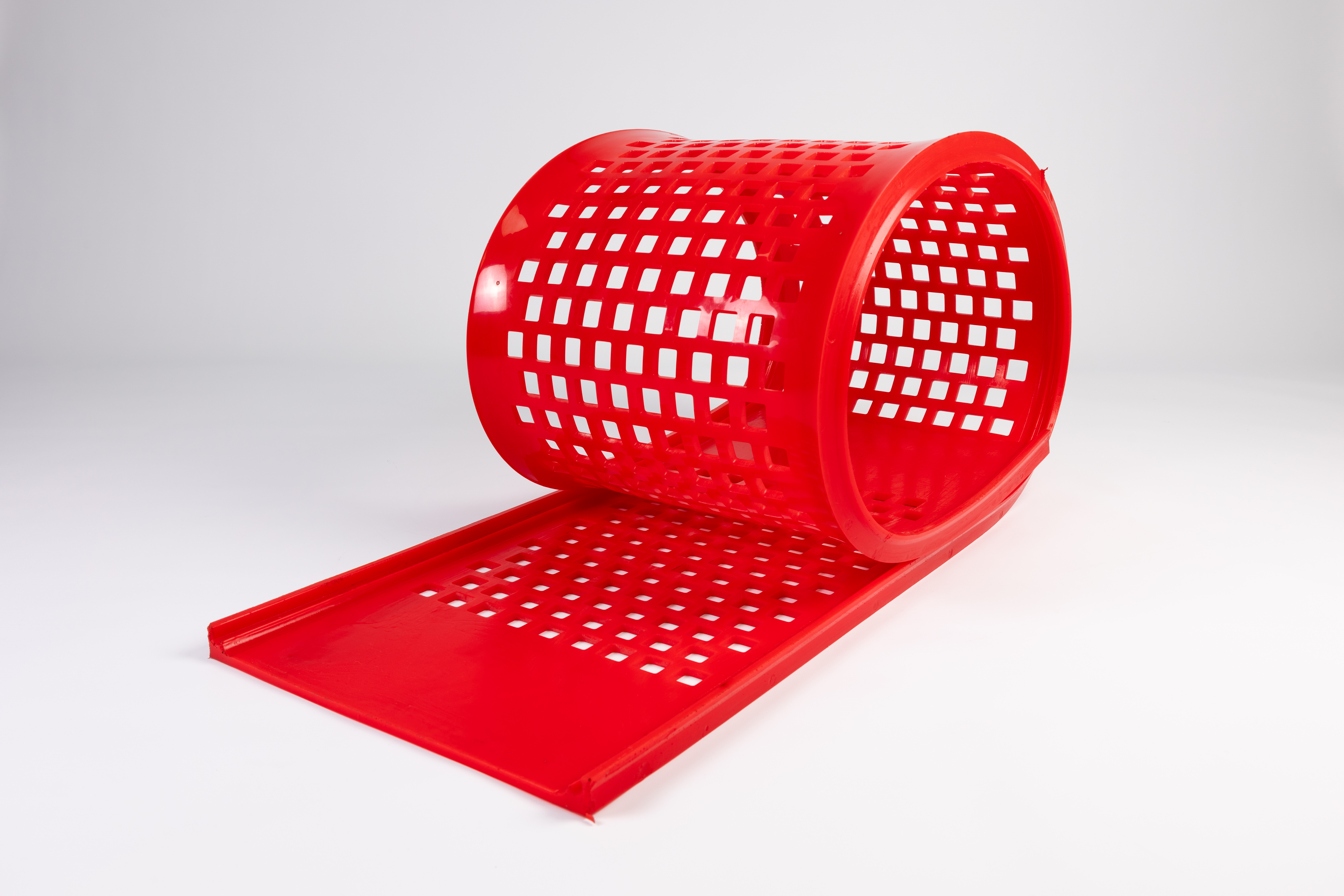
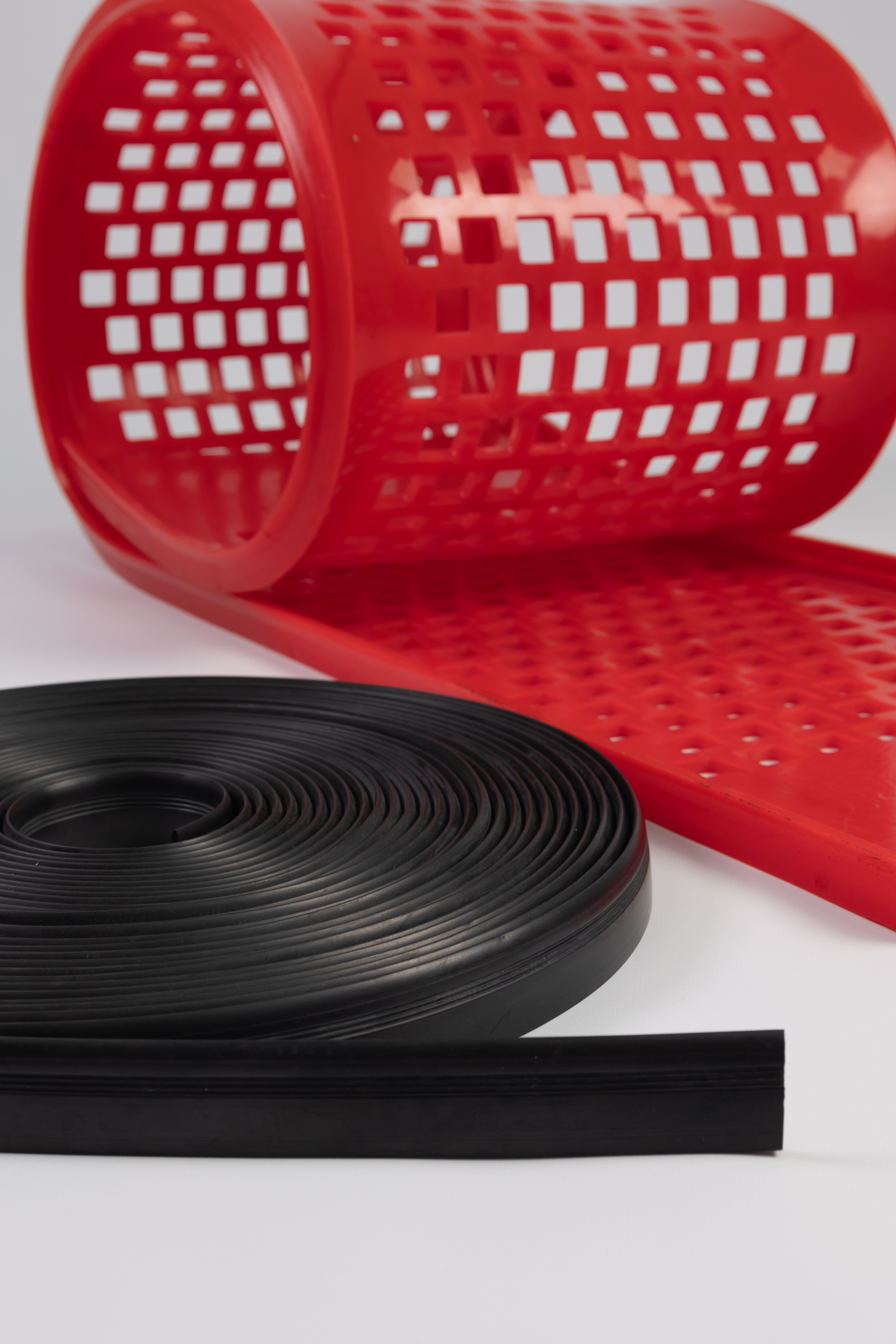
Bivitec and Spaleck mats work in the same way as standard flip flow mats. They are used to screen difficult materials that often peg or blind conventional screening media. These mats feature moulded profiles along the long edges. The profiles locate into channel sections fastened to the screen cross members. When installed they are secured with a rubber wedging strip driven down between the profiles.
How Bivitec Mats Work
Bivitec flip flow and Spaleck screens use a unique motion to prevent material from pegging or blinding on the screen. A fixed cross member and a moving cross member create the flip flow movement. The motion of the screen drives this action. As the screen operates, alternating mats sit flat, form a dish, or move between the two positions. The constant flexing reduces blinding and as a result, prevents material build up.
Construction and Sizes
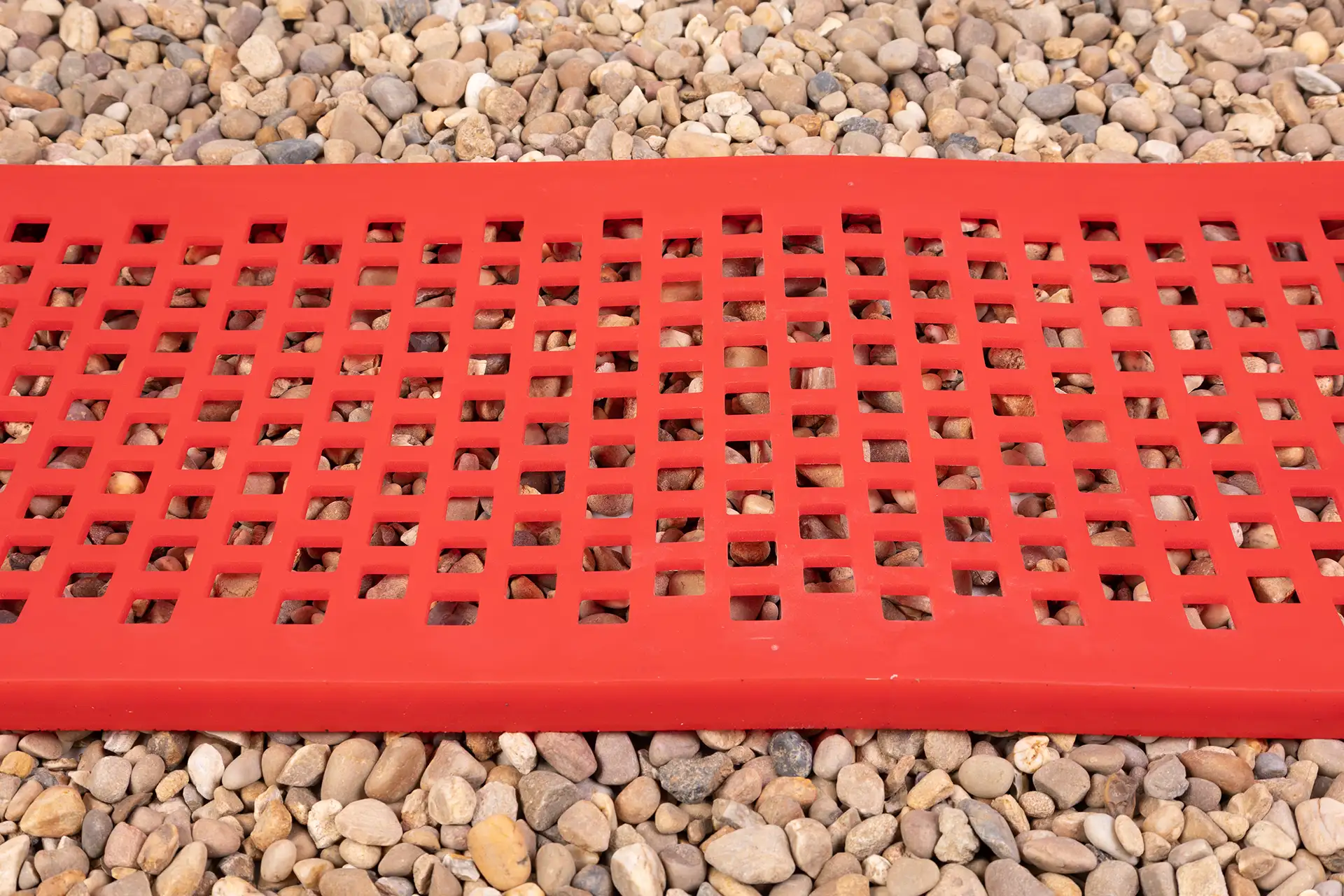
Bivitec and Spaleck mats are manufactured from flat polyurethane sheets, additionally each mat has a moulded profile along both long sides, punched with the required aperture pattern. Typically these mats measure 328mm in width, while the length is determined by the width of the screen. Common lengths include 1910mm and 2710mm. SCS stocks blank Bivitec mats in 3mm, 4mm, 5mm, and 7mm thick polyurethane.
To meet a wide range of customer requirements and applications, SCS has developed the largest punch library in the UK. Over 600 punching tools are available, with aperture sizes ranging from 1.5mm up to 330mm.
We use cookies to ensure that we give you the best experience on our website. If you continue to use this site we will assume that you are happy with it.