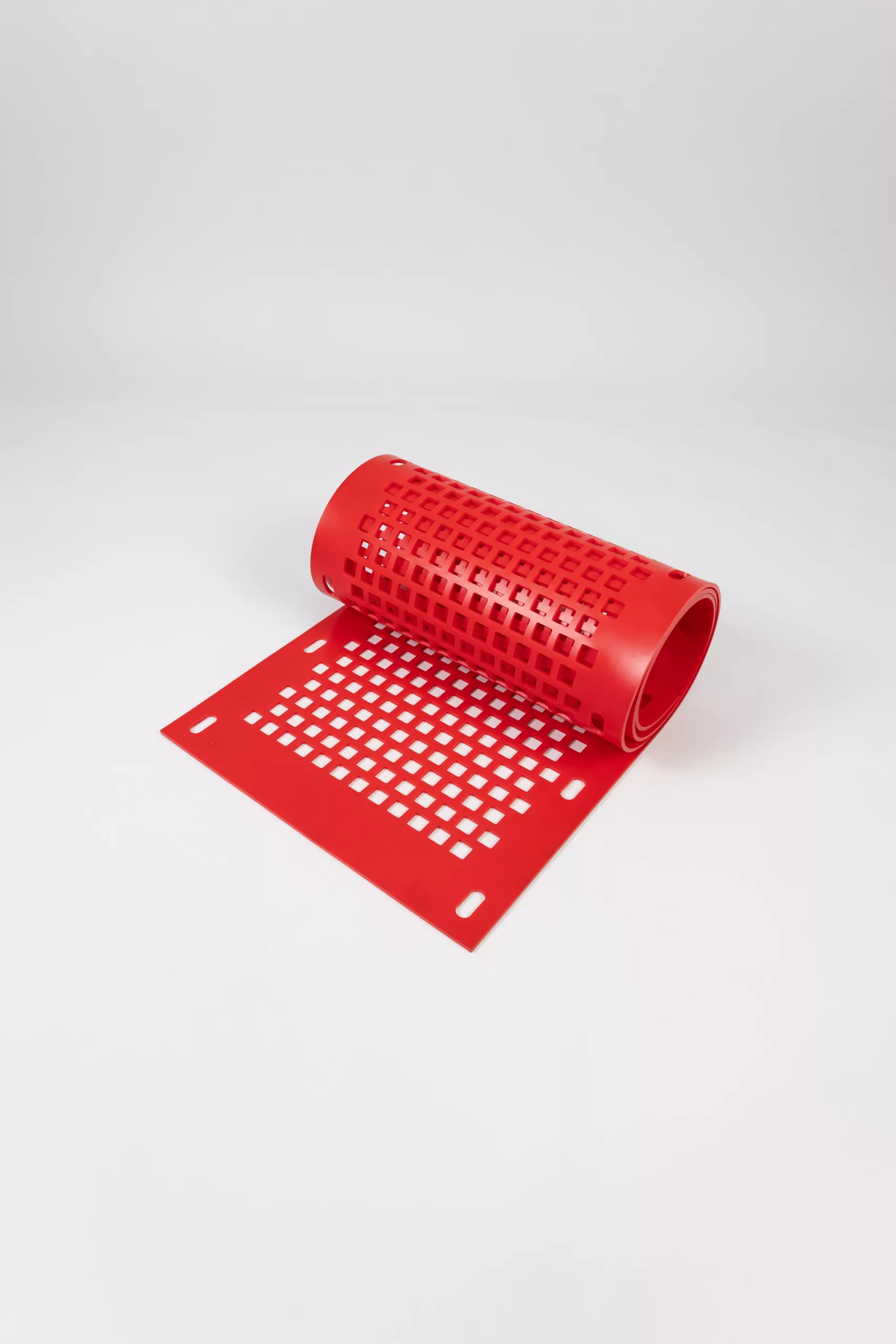
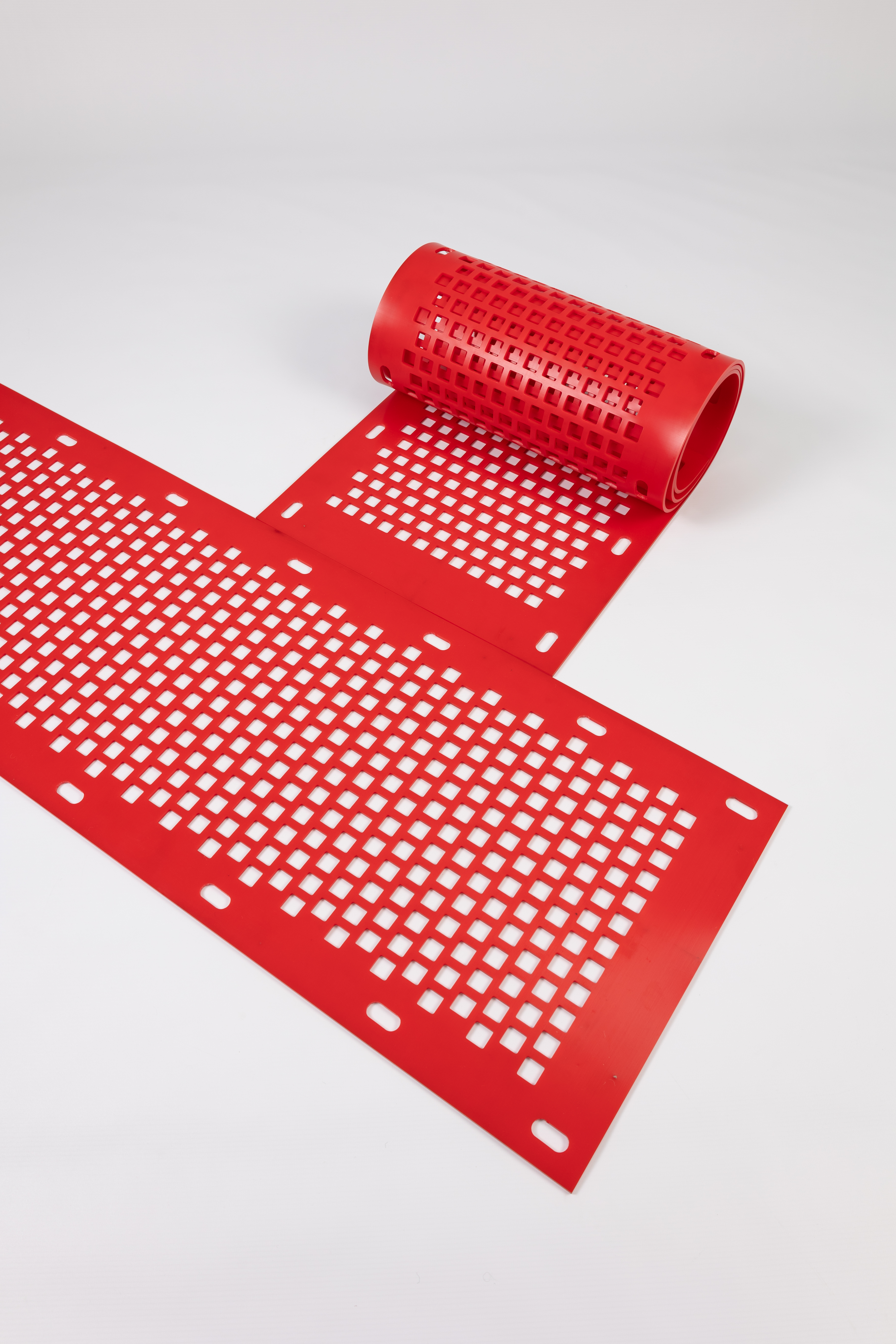
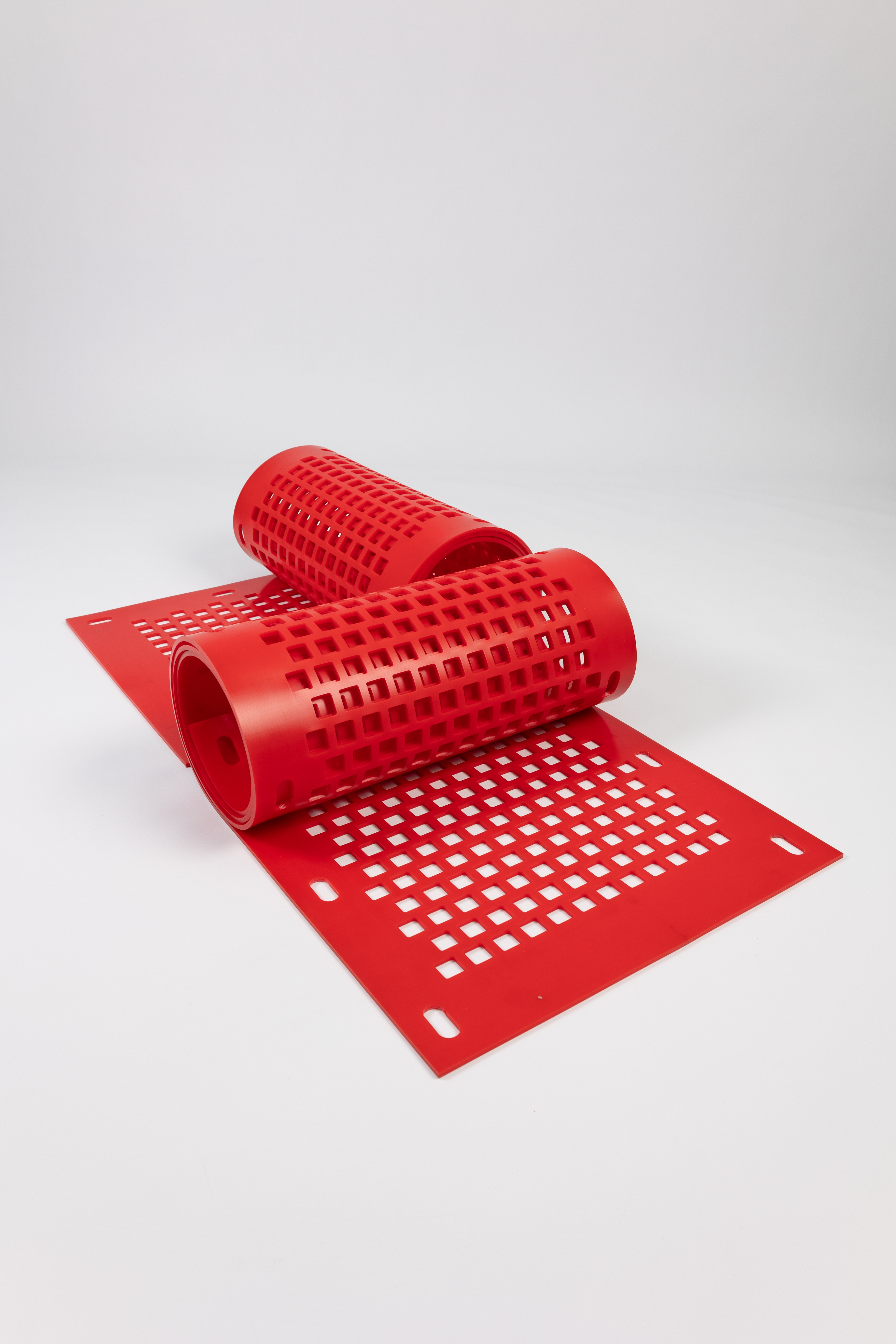
Flip flow mats screen difficult, sticky, or near size materials that often peg or blind conventional screening media. They perform especially well where wire mesh or polyurethane screens struggle to maintain open area and throughput.
How Flip Flow Mats Work
When installed, the flip flow mats are bolted directly to the screen cross members. The first mat overlaps the second, and this pattern continues along the full length of the screen deck.
A fixed cross member and a moving cross member create the flip flow action. Consequently, as the screen runs, this movement forces the mats to flex continuously. The alternating mats sit flat, form a dish, or move between the two. This constant flexing sheds material, prevents build up, and keeps the apertures clear.
Construction and Dimensions
Flip flow mats are manufactured from flat polyurethane sheets. They cut each sheet to size, punch the fixing holes, and then punch the required aperture pattern.
These mats do not have standard sizes. They are manufactured to match the full width of the screen or slightly longer. This allows the mats to fold up the sides of the screen and form the required dish shape during operation.
Usually flip flow mats measure around 350mm in length, although this can be adjusted to suit specific screen designs and applications. The mats use thin material to promote flexibility. SCS stocks thicknesses of 3mm, 4mm, and 5mm.
Supplying Complete Solutions
We use cookies to ensure that we give you the best experience on our website. If you continue to use this site we will assume that you are happy with it.